
Be Part of the Story
Watch the docuseries and understand how the policy shapes the lives of Aeta mothers and their communities. Join the conversation, raise awareness, and be part of the change.
Watch the trailer to see why their voices matter now more than ever.
The four-part documentary series reveals the unseen struggles of Aeta mothers in Sitio Dampay, Palauig, Zambales as they navigate the realities of the No Homebirth Policy. Through their own stories, we uncover the long journeys they endure, the limited resources they face, and the urgent need for more compassionate, accessible maternal care.
Introducing
Giting Ng Duyan
A documentary project that tells the real-life stories of Aeta mothers who give birth at home or outside health facilities due to various barriers. The title “Giting ng Duyan” symbolizes the strength, resilience, and courage of mothers who nurture life despite difficult circumstances. The project explores the impact of the no homebirth policy on Indigenous communities and the challenges these mothers face even when they support the policy and want to comply with it.
Through their stories, the documentary also explores who assists these mothers during childbirth and how they navigate these difficult circumstances. The project advocates for greater awareness, understanding, and more inclusive maternal healthcare systems that consider the realities and needs of Indigenous mothers.
Meaning of the Title ‘Giting Ng Duyan’
The title Giting ng Duyan reflects both the vulnerability and the strength surrounding childbirth in Aeta communities.
In Sambal, the word giting can describe a situation where one’s life hangs by a thread (Houck & Quinsay, 1968). This meaning captures the danger and uncertainty that can accompany childbirth in remote mountain communities where access to hospitals and maternal healthcare is limited. It reflects how giving birth can become a life or death experience for many Aeta mothers.
At the same time, in Tagalog, giting is understood as bravery, courage, and inner strength. This meaning represents the resilience of Aeta mothers who continue to bring life into the world despite these risks.
No Homebirth Policy
Introduced in 2008, the No Homebirth Policy aims to make childbirth safer by encouraging deliveries in health facilities. But for many women in underserved communities, barriers like poverty and distance still shape where and how they give birth.
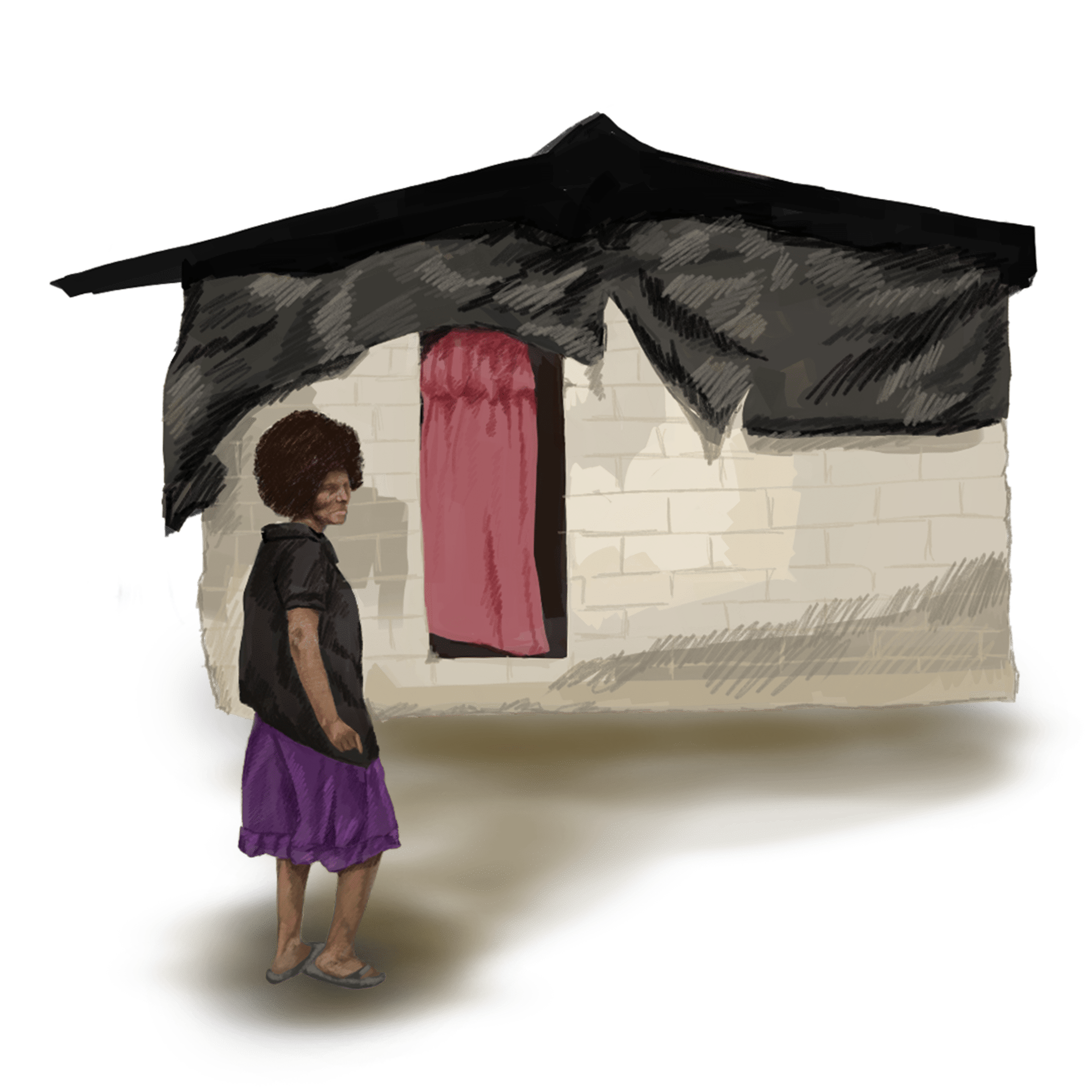
Nanay Rosalie G.
For mothers living farther up in the mountains, the trip can take much longer. Travel time depends on traffic, road conditions, and whether transportation is available at all.
“Ay, mga isang oras pa ang byahe, Madam, papunta sa ospital. Lalo na pag marami pang traffic diyan, Madam. Edi isang oras at kalahati, talagang hindi ka na aabot, Madam.”
Nanay Kim
Even mothers who plan to give birth in hospitals sometimes end up delivering at home when labor progresses too quickly. Nanay Kim Teves experienced this when her contractions became too strong before she could reach a health facility.
“Pagdating po nila rito, lumabas na po ang bata. Hindi na po nahintay na madala sa ospital.”
Nanay Rosalie P.
For many Aeta mothers, the presence of a midwife provides reassurance during childbirth. Mothers often call on them during labor, knowing they will come as soon as possible.
“Kontakin lang po namin sila—’yung auntie ko po na midwife—agad-agad naman po silang dumarating kapag tinawagan po namin sila.”

© Copyright 2026 Giting Ng Duyan. All Rights Reserved